
Pool Filter Pressure Problems: What High Pressure Means and What to Do Next
Blog/ Pool Filter Pressure Problems
A pressure gauge is not just a random number on your equipment pad. It is one of the clearest signals your pool has. When filter pressure climbs, flow often drops. Skimming gets weaker, your cleaner may slow down, and water can start looking dull or cloudy even if you are adding the right chemicals.
In Wylie and across North Texas, pressure problems show up most often during pollen weeks and after storms, because filters load fast when the air is full of fine debris and the pool is catching more than normal.
The quick answer: what high filter pressure usually means
Most of the time, high filter pressure means the filter is getting clogged with debris, and your system is pushing against that restriction.
Here is the simplest way to think about it.
Your clean pressure number is your baseline.
When the gauge climbs well above that baseline, your filter needs attention.
Many manufacturers use a similar rule of thumb. Clean when the pressure is roughly 8 to 10 psi higher than the clean starting pressure. The exact number can vary by system, but the baseline idea is the part that matters.
Step one: find your clean baseline pressure
If you already know your baseline
Great. Use it. If you cleaned the filter recently, look at the gauge right after the system is running smoothly. Write that number down. That is the reference that makes everything else easy.
If you do not know your baseline
Clean the filter first, then restart the system and let it run for a few minutes until flow stabilizes. Record that pressure. From then on, you can stop guessing and just follow the gauge.
This is one reason weekly service helps. A tech can track the baseline, spot changes early, and keep filtration working before water quality slips.
What causes high filter pressure
High pressure is almost always a return side restriction. In plain language, water is having trouble getting through the filter or back to the pool.
Dirty filter media
This is the most common cause. Your filter is doing its job, then it fills up. After storms, heavy swim weeks, and pollen season, a filter can load up quickly.
Too much debris at once
If you are clearing a green pool, recovering from a storm, or vacuuming a lot of fine dirt, the filter may clog faster than usual.
Return eyeballs or return lines restricted
Sometimes the filter is not the problem. A return fitting can be clogged, or a return valve may be partially closed. That can push pressure up because water cannot leave the system easily.
Valves not fully open
A valve that is partly closed, or a diverter that is not set correctly, can create high pressure and weak flow.
Cartridge scaling or oil fouling
If you hose off a cartridge and pressure barely changes, it may be scaled with calcium or coated with oils and sunscreen. In that case, it usually needs a proper cartridge cleaning soak or replacement, not just a quick rinse.
DE and sand filter issues
With DE filters, too much DE, damaged grids, or old DE packed into the system can create restriction. With sand filters, channeling or a dirty sand bed can reduce performance. Sometimes pressure is high and water is still cloudy, which points to filtration efficiency issues as well as restriction.
A bad gauge
Occasionally, the gauge itself is the problem. If the needle is stuck, bouncing wildly, or never moves, you may be reading a bad number. A simple check is to compare pressure before and after a known cleaning. If nothing changes, the gauge may be faulty.
What to do next, in a safe order
Step 1: Confirm water level and clear the baskets
Make sure the water level is at least mid skimmer opening. Empty skimmer baskets and the pump basket. If baskets are full, circulation suffers and readings can be misleading.
Step 2: Look for obvious restrictions
Check that valves are open and returns are not blocked. Make sure a cleaner line or water feature valve is not choking the return flow.
Step 3: Clean the filter the right way for your filter type
Cartridge filter basics
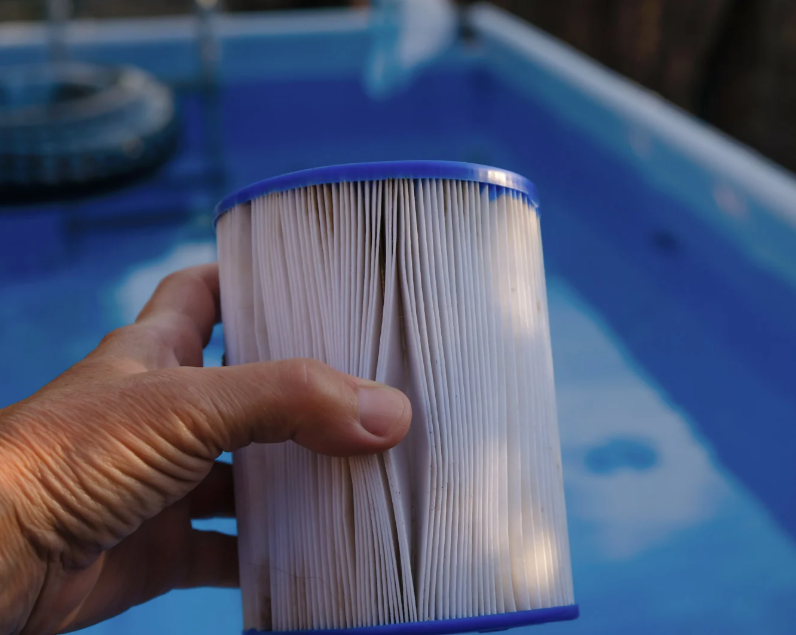
Turn off the pump at the breaker. Open the air relief on top of the filter to release pressure. Remove the cartridge and rinse thoroughly between pleats. If cartridges are oily or scaled, use a proper cleaner. Then reassemble, restart, and record the clean pressure.
Sand filter basics
Backwash according to your system instructions until the sight glass runs clear. Rinse if your valve has a rinse setting. Return to filter mode, restart, and record pressure.
DE filter basics
Backwash if your system is designed for it, then recharge with the correct amount of DE per manufacturer instructions. If pressure remains high, grids may need cleaning.
Safety reminder
Never open a filter clamp or lid while the system is under pressure. Always shut the pump off and relieve pressure first. If you are not comfortable doing this, it is smarter to call a pro.
Pentair Clean and Clear support page
Step 4: Restart and record pressure
Once the filter is clean and the system is running, record the new pressure. That is your refreshed baseline.
Step 5: If pressure stays high, stop chasing it and get it diagnosed
If the filter is clean, baskets are clear, and valves are open, but pressure is still high, the issue may be scale, a return restriction, a valve problem, or internal filter issues. At that point, guessing can cause damage.
Contact
Why high pressure matters for water quality
When pressure is high, flow is often reduced. Less flow means less skimming, weaker circulation, and filtration that cannot keep up. In North Texas, that can show up as cloudy water that never fully clears, chlorine that seems to disappear faster than normal, and algae that starts in corners.
This is where homeowners get stuck. They keep adding product to fix cloudy water, but the filter is loaded and the pool cannot clear the fine particles.
How to prevent high filter pressure problems in Wylie
Track your baseline pressure
Write down the clean pressure right after a full cleaning. Use that number as your real reference, not a generic normal range from the internet.
Expect pressure to rise during pollen weeks and after storms
In North Texas, spring pollen and storm season can load filters quickly. During those weeks, check baskets more often and glance at the gauge every couple days.
Clean based on pressure rise, not on a random calendar
A calendar schedule is fine as a reminder, but pressure rise tells you what the filter is actually doing.
After a storm, plan for a pressure check the next day
Storm debris often loads the filter after the first long circulation run. If pressure jumps quickly, cleaning sooner saves you time.
When it makes sense to call Diamond Sparkle Pools
Call us if any of these are happening.
Pressure rises quickly again right after you cleaned
Return flow is weak even with clean baskets
You are not comfortable opening the filter safely
Your pool stays cloudy and you suspect filtration is the issue
You see leaks, air bubbles, or unusual noises at the equipment pad
We are based in Wylie and serve Murphy, Sachse, Lavon, Rockwall, and surrounding North Texas communities.
Frequently Asked Questions
What is normal pool filter pressure
Normal depends on your equipment, your plumbing, and your filter type. The most reliable reference is your clean baseline pressure right after cleaning.
How much pressure increase means it is time to clean
A common rule of thumb is cleaning when pressure rises roughly 8 to 10 psi above the clean baseline. The bigger point is to use your baseline and respond early, before flow drops.
Why did my pressure stay high after cleaning
The gauge may be faulty, a valve may be partly closed, a return fitting may be restricted, cartridges may be scaled or oil fouled, or the filter may have an internal issue like damaged grids.
Can high pressure cause cloudy water
Yes. High pressure often comes with reduced flow, which reduces filtration effectiveness and circulation. That makes it harder for the pool to clear fine particles.
Closing Call To Action
If your pressure gauge is creeping up and your water is not staying as clear as it should, we can help. Diamond Sparkle Pools can inspect your filter, restore proper flow, and set a routine that fits North Texas weather.