
Pool Water Chemistry Basics for Texas Heat: Chlorine, pH, and Alkalinity Made Simple
Blog / Pool Water Chemistry Basics for Texas Heat
If you own a pool in Wylie, you have probably had a week where you thought, I did everything right, so why does the water look tired. North Texas heat is a different kind of pressure on pool water. Sunlight burns through sanitizer, warm water speeds up demand, storms bring in debris, and heavy swim weeks add sunscreen and oils that chlorine has to handle.
This is the simple version. What to test, what the numbers mean, and what order to fix things in so you stop chasing your pool.
If you want weekly maintenance so your water stays stable through storms and heat, learn more here.
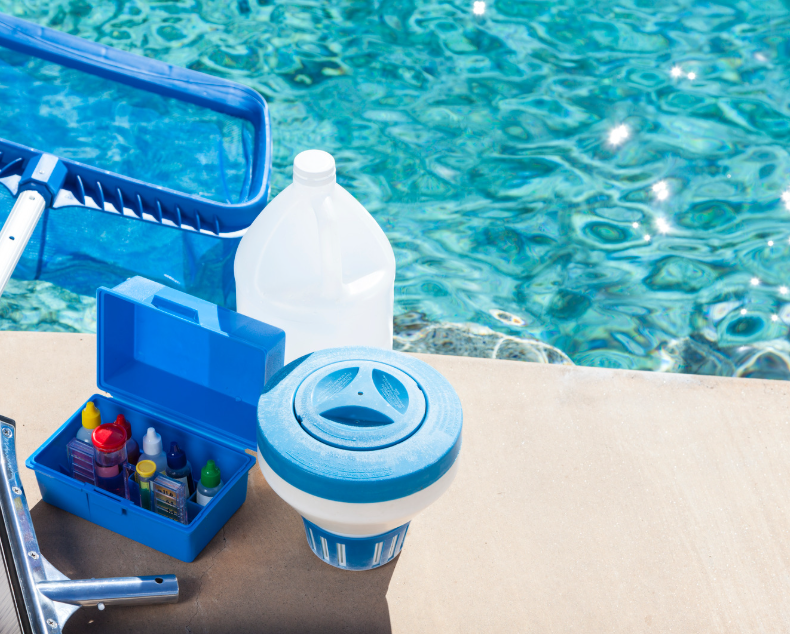
The quick answer: the five things that keep most North Texas pools clear
Most clear pools in Wylie run on the same five fundamentals.
Free chlorine
pH
Total alkalinity
Stabilizer, also called cyanuric acid
Filtration and circulation
Calcium hardness matters too, especially if you see scale or rough surfaces. But the five above are what usually decide whether your week is easy or annoying.
For a baseline reference on what to test and why, the CDC home pool guidance is a useful starting point.
Free chlorine is your safety and clarity engine
Free chlorine is the active sanitizer. When it falls too low, algae and cloudiness often start quietly in steps, corners, and shaded spots.
If you keep fighting algae, this recovery plan shows the order that works.
pH controls how well chlorine works and how the water feels
If pH drifts too high, chlorine becomes less effective and scale becomes more likely. If pH drifts too low, water can feel harsh and it can be tough on surfaces and equipment. You do not need perfect. You need consistent.
Total alkalinity helps keep pH from swinging
Think of alkalinity as pH stability. Too low and pH bounces around. Too high and pH often wants to drift upward. Avoiding extremes is the big win.
Stabilizer protects chlorine from the sun, but too much causes headaches
Stabilizer helps protect chlorine from sunlight, which matters in Texas. The catch is that too much stabilizer can make chlorine less effective at a given reading. Tablet heavy routines can slowly raise stabilizer over time. If your pool looks dull even though chlorine tests okay, stabilizer creep is one of the first things to check.
Filtration and circulation make chemistry work
If the filter is loaded or circulation is weak, water will not clear and chemistry will feel inconsistent. If your gauge is climbing and flow is dropping, start here.
Why Texas heat makes pool chemistry feel like it changes overnight
Sun and warm water increase chlorine demand
In peak summer, your pool loses chlorine faster. That is why a pool can look fine early in the week and start drifting by the weekend if the routine is not steady.
Storms add chlorine eating organics and fine debris
After storms, debris consumes chlorine and fine particles stay suspended until the filter catches them. If your pool turns cloudy after storms, use this plan.
Heavy swim weeks raise the demand
More swimmers means more sunscreen, sweat, and oils. You do not need a complicated routine. You need steady testing and steady adjustments.
The order to fix your water when something looks off
Step 1: Check baskets, circulation, and filter pressure first
Empty skimmer baskets and the pump basket. Confirm strong return flow. Look at the pressure gauge. If pressure is well above your clean baseline, clean the filter. This one step solves a lot of cloudy water.
Step 2: Test pH
If pH is far off, chlorine will not perform as well. Correct pH first so whatever chlorine you add actually works.
Step 3: Bring free chlorine back to an effective level
Test, then dose. Keep it steady long enough for the pool to catch up, especially after storms or heavy use.
Step 4: Brush and vacuum
Brushing knocks loose film and algae trying to start. Vacuum slowly so you remove debris instead of stirring it back into suspension.
Step 5: Give filtration time and recheck
Cloudiness often clears with steady circulation, brushing, and a clean filter. Recheck pressure the next day. In storm season, filters can load quickly twice in a row.
Pump run time matters because chemistry does not work well in stagnant water. If you are unsure about pump run time in North Texas summer, here is a practical guide.
The two blind spots that cause most summer headaches
Stabilizer creep from tablets
Tablets are convenient, but over time heavy tablet use can raise stabilizer. Higher stabilizer can make chlorine feel weaker at the same reading, so the pool looks dull, then cloudy, then algae starts in the usual corners. If you keep adding more chlorine to get the same result, test stabilizer and adjust your approach.
Scale and calcium issues
If you see white crust on tile, rough spots, or a salt cell that keeps scaling, calcium hardness and pH are usually part of the story. The fix is not only cleaning the symptom. It is keeping pH controlled and keeping alkalinity from pushing pH upward so scale is less likely to form.
A simple weekly routine that works in Wylie
Every day or two during peak season
Look at the water. Empty baskets if needed. If the pool is getting heavy use or you just had a storm, test free chlorine and pH. Small corrections beat big corrections.
Twice per week
Brush steps and corners. This is where algae likes to start.
Once per week
Do a fuller test and adjustments. Focus on free chlorine, pH, and alkalinity. Check stabilizer regularly if you use tablets. Clean the filter when pressure rises well above the baseline, not just because the calendar says so.
After storms
Skim, empty baskets, brush, and run the pump longer until clarity returns. If your water is cloudy the day after a storm, assume the filter is loaded until proven otherwise.
What not to do when you are frustrated with pool chemistry
Do not add multiple products at once and hope it works. Test, adjust, then re test.
Do not ignore the filter. A loaded filter can make good chemistry look bad.
Do not mix chemicals or store them improperly. Use basic chemical safety practices.
Common North Texas problems and what they usually mean
My chlorine keeps disappearing
This is usually heavy sun and heat, heavy organics after storms, or an early algae start. Check pH, confirm filtration is working, brush thoroughly, and keep chlorine steady instead of doing one big dose and hoping.
My pH keeps climbing
This often points to high alkalinity, aeration from water features, or a sanitation setup that trends upward. The fix is usually steady small corrections, plus making sure alkalinity is not pushing pH up.
My water is cloudy but chlorine looks okay
Cloudiness is often filtration and fine particles. Clean the filter, check pressure, vacuum slowly, and give the pool time to clear. If you keep adding products while the filter is loaded, you will stay frustrated.
Algae keeps showing up in the same spot
That is usually a circulation dead zone plus inconsistent brushing. Aim returns to improve movement and brush that area more often.
A simple decision checklist
If you travel a lot
Salt can feel easier because it automates the daily feed. You still need testing, but it can reduce day to day manual dosing.
If you want fewer moving parts
Traditional chlorine usually wins. A salt system adds a cell and electronics that will eventually need service.
If you are tired of algae and cloudy water
Either system can work. The real key is a consistent routine: enough pump run time, clean filters, brushing, and stable pH.
When to call Diamond Sparkle Pools
If you are tired of guessing, we can help you get the water stable and keep it there. Call us if any of these sound familiar.
Your water swings every week no matter what you do
pH keeps climbing and you are constantly correcting it
Cloudiness lingers after storms
You keep getting algae spots in steps and corners
You want a weekly plan that prevents problems instead of reacting to them
We are based in Wylie and serve Murphy, Sachse, Lavon, Rockwall, and surrounding North Texas communities.
Contact
Frequently Asked Questions
What are the most important pool chemistry numbers to watch
Free chlorine and pH are the two most important, then alkalinity and stabilizer. Filtration and circulation are the foundation that makes chemistry work.
How often should I test my pool in summer
Test more often during hot weeks and after storms. Many homeowners check chlorine and pH every day or two during peak season, then adjust based on stability.
Is cloudy water always a chemistry problem
Not always. Cloudy water is often a filtration problem, especially after storms and pollen weeks.
Does brushing really matter
Yes. Brushing breaks up surface film and helps prevent algae in low circulation areas.
Closing Call To Action
If you want your water clear and comfortable without the weekly guessing game, Diamond Sparkle Pools can help. We provide dependable pool service in Wylie and across North Texas, including Murphy, Sachse, Lavon, and Rockwall.