
Saltwater vs Chlorine Pools in North Texas: Cost, Maintenance, and Common Issues
Blog / Saltwater vs Chlorine Pools in North Texas
If you are in Wylie or anywhere around North Texas and you are trying to decide between a saltwater pool and a traditional chlorine pool, you are probably not asking because you love pool chemistry. You are asking because you want the pool to stay clear, feel comfortable, and not turn into a weekly guessing game.
Here is the honest truth. Both systems can work great here. Both can also be frustrating if water balance slips or the filter is dirty. The difference is mostly how chlorine is added, what you watch more often, and what parts you will eventually replace.
If you want a pro to keep your water stable through storms and heavy swim weeks, learn more about weekly maintenance here.
The quick answer: what saltwater actually means
A saltwater pool is still a chlorine pool. It just makes chlorine on site.
A salt system uses a salt chlorine generator, often called a salt cell. You add the correct amount of salt to the pool. When the pump runs, water passes through the cell and the system converts some of that salt into chlorine. When the system is set correctly, it feeds small amounts of chlorine consistently.
A traditional chlorine pool usually relies on liquid chlorine, tablets, or a combination, and you adjust based on testing.
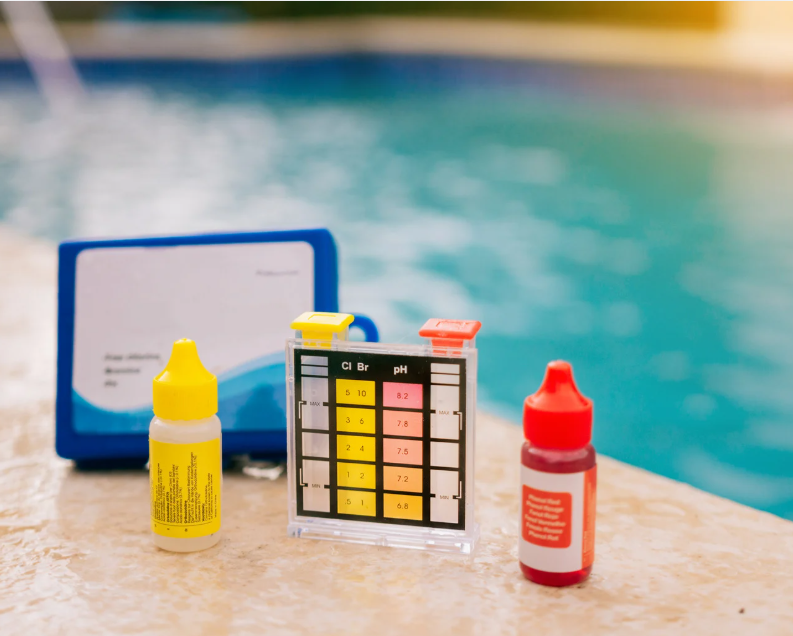
In both cases, your goal is the same. Maintain effective disinfectant and keep pH in a range where chlorine works well. The CDC home pool guidance is a useful baseline for what to test and why.
Why this choice feels different in North Texas
Why this choice feels different in North Texas
Warm water and strong sun burn through sanitizer faster. If chlorine falls behind for even a couple days during peak heat, algae can start quietly in steps and corners.
Storms and wind change the pool fast
Spring pollen loads skimmers and cartridges fast. If your water looks hazy during pollen weeks, it is often a filtration issue first, not a sanitizer issue.
Pollen weeks make water look dull
Warm water and strong sun burn through sanitizer faster. If chlorine falls behind for even a couple days during peak heat, algae can start quietly in steps and corners.
Cold snaps change salt cell output
Many salt cells reduce output or shut off when water temperature drops. That is normal. In a freeze, protecting equipment matters more than whether the pool is salt or chlorine.
Saltwater pool pros for Wylie homeowners
Steadier chlorine feed when tuned correctly
A salt system can keep chlorine steadier because it produces small amounts over time. That steadiness can be helpful in summer when demand is high.
Less handling of chlorine products
You are not hauling as many jugs or tabs when the system is operating properly. You still test and adjust, but the routine can feel simpler.
Many swimmers like the feel
A lot of homeowners say saltwater feels smoother on skin and eyes. The bigger win is usually consistency when the system is dialed in.
Saltwater pool cons and common issues in North Texas
Upfront cost and replacement cost
A salt chlorine generator is equipment, and equipment wears out. Salt cells are consumable parts that eventually need replacement. Control boards and sensors can fail too.
pH often rises, so you watch it more
Many saltwater pools see pH drift upward. If pH stays high, chlorine becomes less effective and scale can build faster.
Scale on the cell can reduce output
Scale can build on the salt cell plates when water balance is off. Scaling reduces chlorine production and can shorten cell life.
Settings and run time still matter
A common summer problem is this. The cell is set too low, the pump is not running long enough, and chlorine slowly falls behind. The pool looks fine, until it does not.
Traditional chlorine pool pros in North Texas
Lower upfront equipment cost
A traditional chlorine pool does not require a salt chlorine generator, which usually means lower initial equipment expense.
Simple troubleshooting
If chlorine is low, you add chlorine. You are not wondering whether the cell is scaled, whether the water is too cold for production, or whether a salt reading is wrong.
Flexible dosing options
Some homeowners prefer liquid chlorine for tighter control. Others like tablets for convenience. A traditional setup lets you choose a method that fits your routine.
Traditional chlorine pool cons and common issues in North Texas
More hands on dosing in summer
In peak heat, many chlorine pools need more frequent additions. If you skip a couple days during a hot week, chlorine can drop quickly.
Tablet heavy routines can raise stabilizer
If you rely heavily on tablets, stabilizer can creep up over time. When stabilizer climbs too high, the pool can look dull or start algae even when your test results look fine to you.
Bigger swings when the routine slips
Traditional chlorination can work beautifully, but it depends on regular testing and dosing. When the routine slips, the pool can swing quickly after storms or heavy swimming.
What you still have to do with both systems
Test disinfectant and pH routinely
At minimum, keep an eye on disinfectant and pH. pH matters because it affects how well chlorine works.
Keep filtration and circulation strong
A clean filter and steady circulation clear fine particles after storms and pollen weeks. If your pool is cloudy, start with baskets and filter condition before you throw extra products at it.
Brush steps and corners
Algae loves surfaces, especially shaded steps and corners. Brushing breaks up film and helps sanitizer reach the spots that get ignored.
Which one is better for Wylie and North Texas pools
Saltwater is usually a great fit if you want more automation, you want a steadier daily feed, and you are willing to stay on top of pH and plan for eventual cell replacement.
Traditional chlorine is usually a great fit if you want lower upfront cost, you want direct control, and you do not mind dosing more often and keeping an eye on stabilizer if you use tablets.
If you are already planning a remodel or equipment upgrade, it is a smart time to decide, because pad layout and plumbing changes are easier during a remodel.
A simple decision checklist
If you travel a lot
Salt can feel easier because it automates the daily feed. You still need testing, but it can reduce day to day manual dosing.
If you want fewer moving parts
Traditional chlorine usually wins. A salt system adds a cell and electronics that will eventually need service.
If you are tired of algae and cloudy water
Either system can work. The real key is a consistent routine: enough pump run time, clean filters, brushing, and stable pH.
When to call Diamond Sparkle Pools
If you want help choosing, or you want your current system tuned so it actually behaves, we can help. Call us if any of these sound familiar.
Your salt cell is on but chlorine stays low
pH keeps climbing and you are adding acid constantly
Your pool keeps turning dull or cloudy after storms
Algae keeps showing up in steps and corners
You want a weekly plan so the pool stays steady in North Texas heat
We are based in Wylie and serve Murphy, Sachse, Lavon, Rockwall, and surrounding North Texas communities.
Contact
Frequently Asked Questions
Is a saltwater pool chlorine free
No. A saltwater pool produces chlorine. The difference is how the chlorine is made and fed into the water.
Does saltwater mean less maintenance
It can mean less manual chlorine handling, but you still test water, clean filters, and watch pH. Salt is not a set it and forget it system.
Can a saltwater pool turn green after rain
Yes. Storms add debris and consume chlorine. If the system is not producing enough chlorine or the pump is not running enough, algae can start.
Is salt bad for pool equipment
Salt can contribute to corrosion if water balance is neglected or if materials are not appropriate. Proper balance and good installation reduce that risk.
Closing Call To Action
If you want clear water without the weekly guessing game, Diamond Sparkle Pools can help you choose the right system and keep it running correctly. We provide dependable pool service in Wylie and across North Texas, including Murphy, Sachse, Lavon, and Rockwall.